-
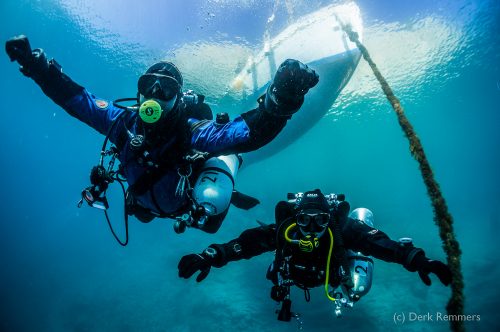
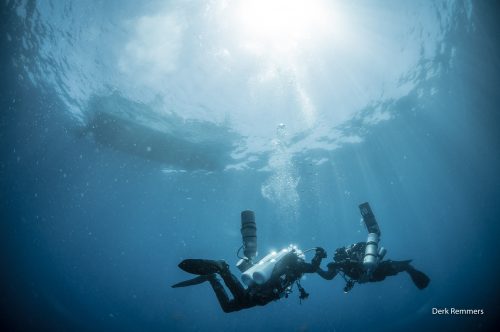
GUE’s Technical Diver Level 1 course is designed to prepare divers for the rigors of technical diving and to familiarize them with the use of different breathing and decompression mixtures. Additional course outcomes include: cultivating, integrating, and expanding the essential skills required for safe technical diving; problem identification and resolution; the use of a double tanks configuration and the potential failure problems associated with it; the use of Nitrox for accelerated and general decompression strategies; the use of helium to minimize narcosis; and the applications of single decompression stage diving with respect to decompression procedures.
-
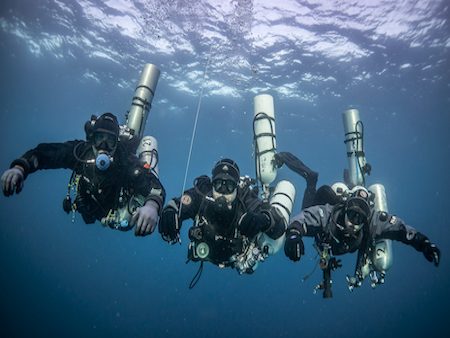
80 meters or 100 meters?! This is the pinnacle of technical diving. Here you will use all the knowledge, skills, equipment and experience from all of your previous training and push your limits to the extreme. There are two pathways; one takes you to 80 meters and the other to 100 meters using the same Extended Range Total Diving System you mastered in previous programs. However, you will now use a minimum of three stages for decompression and travel gases.
-
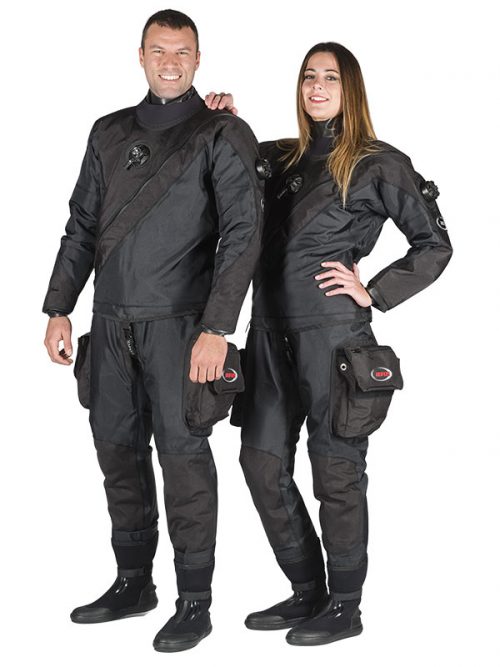
Ελαφριά Στεγανή Στολή Μεμβράνης
Η RS 360 είναι μία στεγανή στολή μεμβράνης κατασκευασμένη από ένα εξαιρετικά ελαφρύ και ανθεκτικό ύφασμα.
-
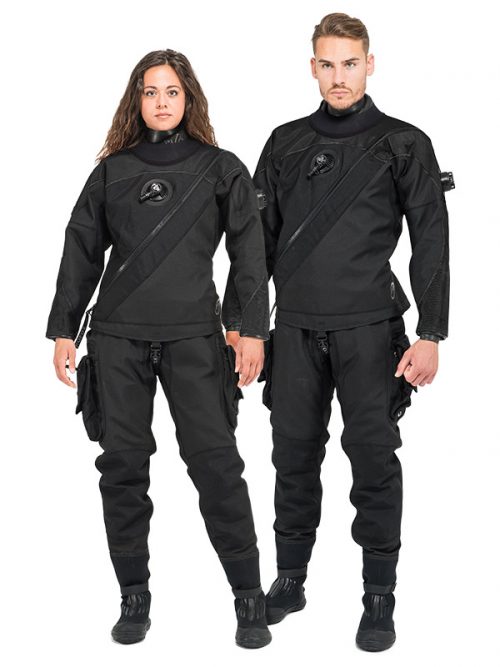
Στεγανή Στολή ΜεμβράνηςΗ RS 450K είναι μία στεγανή στολή κατασκευασμένη από τρία στρώματα μεμβράνης που δημιουργήθηκε για δύτες που ενδιαφέρονται πραγματικά για την ανθεκτικότητα της στολής τους.
-
GUE Tech 2 Course is the pinnacle of GUE’s technical diving courses. It is a rigorous class, designed to prepare you to dive to maximum depth of 75 meters using one bottom stage and two decompression gasses, to manage your gas, bottom time, decompression exposure in a safe and comfortable manner.
Description
GUE’s Technical Diver 2 course is designed to enhance deep diving proficiency while using helium breathing gases and oxygen-enriched decompression gases. Other course outcomes include: the use of multiple stages; the use of trimix with greater percentages of helium; use of hypoxic gas mixture protocols; gas management; oxygen management; extended decompression; accelerated, omitted, and general decompression strategies; dive planning; and management of multiple cylinders.